


Used Bobcat For Sale In 2026: How To Find The Right Machine Without Overpaying
Buying heavy equipment is rarely a casual decision. One machine can tie up a big chunk of cash, affect jobsite productivity, and either save us money for years, or become a repair bill on tracks. That’s exactly why the market for a used Bobcat for sale keeps growing in 2026. For contractors, landscapers, rental businesses, and small construction teams, a well-maintained used Bobcat can deliver the capability we need without the brand-new price tag.
The catch, of course, is knowing how to separate a solid machine from an expensive headache. In this guide, we’ll walk through how to choose the right used Bobcat, what to inspect before buying, how to compare listings fairly, and where to shop online with more confidence.
Key Takeaways
- Buying a used Bobcat offers strong value by reducing upfront costs while maintaining reliable performance for construction and landscaping tasks.
- Evaluate used Bobcat machines based on lift capacity, terrain suitability, and specific job requirements to choose the model that best fits your business needs.
- Thoroughly inspect maintenance records, hydraulics, undercarriage, and attachments to avoid hidden repair costs when purchasing a used Bobcat.
- Compare multiple listings, considering hours, condition, attachments, and location to fairly assess the price of a used Bobcat for sale.
- Purchase from trusted sellers who provide detailed information, allow inspections, and maintain transparent pricing to ensure a confident used Bobcat investment.
- Used Bobcats retain strong resale value and can provide a quicker return on investment by boosting jobsite productivity without the new equipment price tag.
Why Buying A Used Bobcat Can Be A Smart Business Move

A used machine isn’t automatically a compromise. In many cases, it’s the more practical business decision.
Bobcat equipment has a long-standing reputation for durability, strong hydraulic performance, and broad attachment compatibility. That matters because when we buy used, we’re not just buying steel and rubber, we’re buying proven uptime. A machine that has already handled real work and still runs cleanly tells us something important about its build quality.
For many businesses, especially growing crews and owner-operators, preserving cash flow matters just as much as adding capacity. A used Bobcat can let us expand faster, take on more work, or replace an aging unit without stretching the budget too thin.
Lower Upfront Cost And Better Return On Investment
The biggest advantage is obvious: lower acquisition cost. A used Bobcat typically costs significantly less than a new one, which lowers the barrier to ownership and reduces financing pressure. That gives us more room to invest in attachments, trailers, labor, or maintenance reserves.
There’s also the depreciation angle. New equipment usually takes its biggest value hit early. When we buy used, much of that initial depreciation has already happened. If we purchase carefully and maintain the machine well, we may hold resale value better than we would with a new unit bought at full retail.
That can improve ROI in a very practical way. If a skid steer helps us complete grading, material handling, trench prep, or cleanup jobs faster, the machine starts paying for itself through saved labor and added billable work. And if we didn’t overpay upfront, that payback period gets shorter.
Reliable Performance For Construction And Landscaping Work
Used doesn’t mean outdated. Many Bobcat machines from the past several model years still offer exactly what most crews need: dependable lift capacity, compact maneuverability, attachment versatility, and serviceable components.
On construction sites, that means loading debris, moving pallets, backfilling trenches, and handling site prep. In landscaping, it might mean augering fence posts, spreading gravel, clearing brush, or trenching for irrigation. A properly maintained Bobcat can keep up with demanding daily work without needing the newest bells and whistles.
Another reason buyers gravitate toward Bobcat is the ecosystem around the machines. Parts availability is generally strong, service is widely understood, and operators are often already familiar with the controls. That reduces the friction of adding a used machine to the fleet.
Which Used Bobcat Machine Fits Your Needs Best
Not every Bobcat is the right Bobcat. Before we look at listings, we should get clear on the work the machine will actually do most often. A machine that’s perfect for a landscape contractor may be a poor fit for a concrete crew or rental fleet.
Think about the basics first: lift capacity, operating weight, ground conditions, transport requirements, attachment needs, and the width restrictions of the jobs we take on. Those factors usually narrow the field quickly.
Used Bobcat Skid Steer For Sale: Best For Versatile Jobsite Work
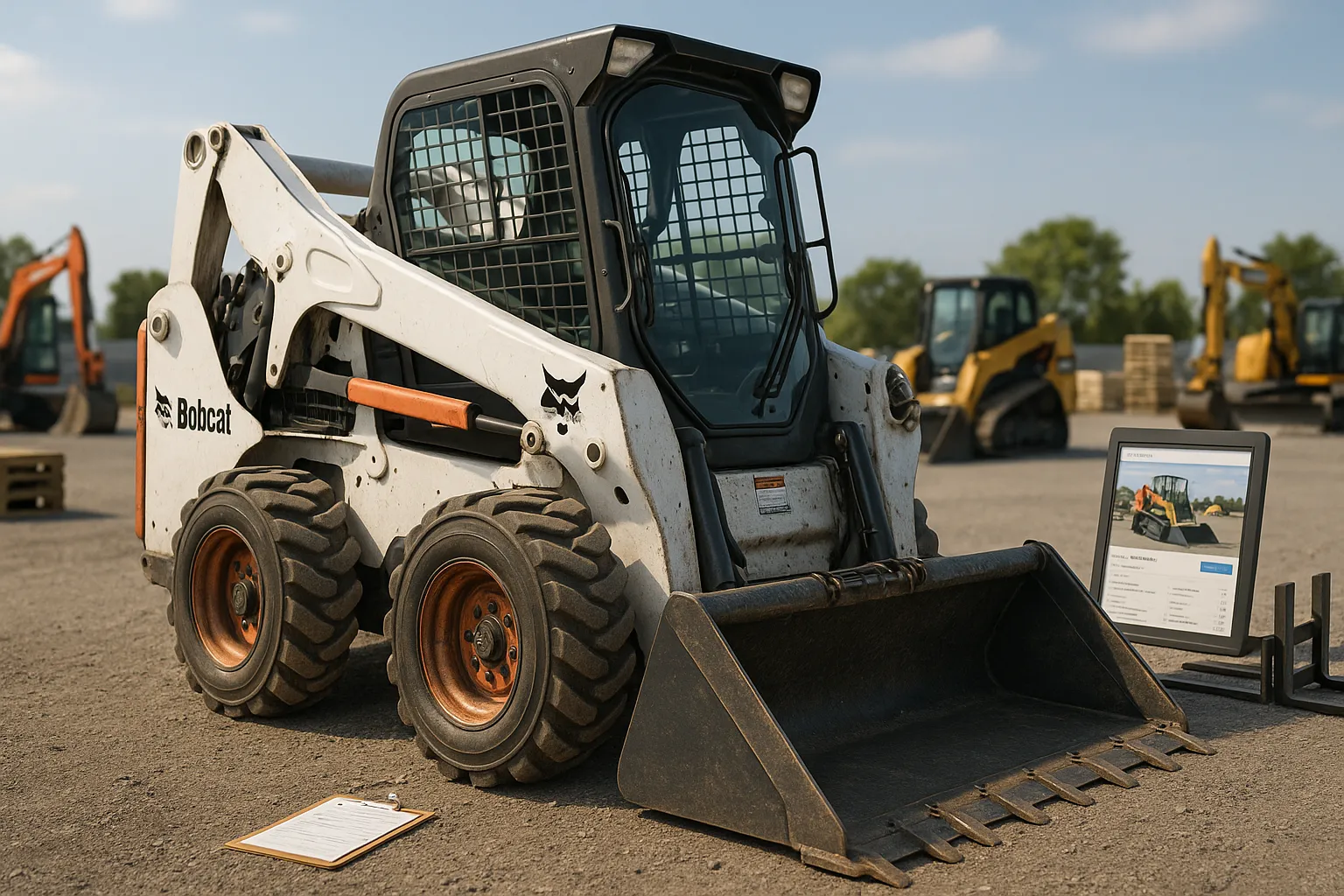
If we’re searching for a used bobcat skid steer for sale, we’re usually looking for the best all-around value. Skid steers remain one of the most versatile machines on any jobsite because they handle a wide range of tasks and accept a huge variety of attachments.
For contractors and property maintenance crews, a used Bobcat skid steer can be the workhorse that gets used every day. Buckets, forks, augers, trenchers, grapples, sweepers, one base machine can cover a lot of ground.
Wheeled skid steers are especially useful when we work on hard surfaces or finished properties and want easier transport and lower undercarriage wear than a track machine. They’re often the first place buyers look when they want dependable utility without overspending.
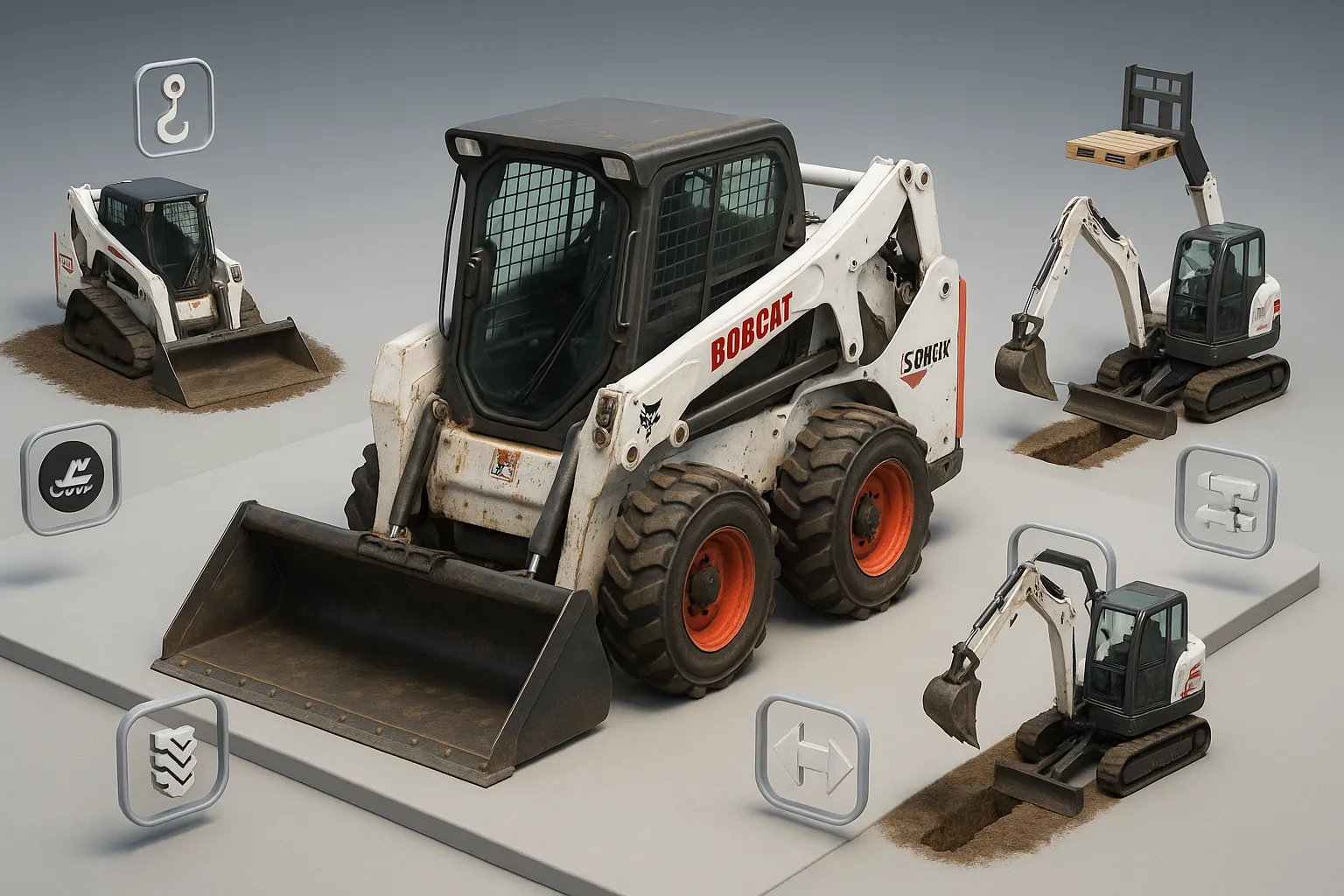
Compact Track Loaders, Mini Excavators, And Telehandlers
If we work on soft, muddy, or uneven terrain, a compact track loader may make more sense than a skid steer. Tracks offer better flotation and traction, which can be a major advantage on landscaping sites, undeveloped lots, and wet conditions. The tradeoff is typically higher undercarriage cost and more maintenance sensitivity.
Mini excavators are the better choice when digging is the main event rather than an occasional task. For trenching, utility installation, drainage work, stump removal, and tight-access excavation, a Bobcat mini excavator often beats trying to force a loader to do excavator work.
Telehandlers fit a different need altogether. If we regularly move materials to height, framing supplies, pallets, roofing loads, masonry units, a Bobcat telehandler can unlock efficiency a skid steer simply can’t match.
The best buying decision usually comes down to this question: what type of work generates revenue for us most often? Buy for that first, then weigh secondary uses.
What To Check Before You Buy A Used Bobcat

This is where good deals are won or lost. A listing can look clean online and still hide expensive problems. We should approach every machine with a simple mindset: verify, inspect, and compare.
A used Bobcat doesn’t need to be perfect. It just needs to be honestly represented and priced in line with its condition.
Hours, Maintenance Records, And Overall Condition
Machine hours are one of the first data points buyers check, but hours alone don’t tell the full story. A higher-hour Bobcat with consistent maintenance may be a better buy than a lower-hour unit that was neglected, stored poorly, or run hard by multiple operators.
Ask for service records if they’re available. We want evidence of routine oil and filter changes, hydraulic service, belt replacement, scheduled inspections, and any major component repairs. A seller who can document maintenance usually inspires more confidence than one who says, “It runs great” and leaves it there.
Then inspect overall condition:
- Look for excessive play in pins and bushings
- Check for weld repairs or cracks on the frame and loader arms
- Inspect the cab, controls, seat, and display functions
- Watch for leaks under the machine after it has run
- Start it cold if possible, not already warmed up before we arrive
Cold starts can reveal a lot, hard starting, smoke, weak battery performance, or rough idle. None of those automatically kill a deal, but they should affect price.
Hydraulics, Undercarriage, Tires, And Attachments
Hydraulics are critical on any Bobcat. Weak lift performance, jerky controls, whining pumps, or leaking cylinders can quickly turn a “good price” into a costly repair project. We should test boom movement, bucket tilt, auxiliary hydraulics, and attachment hookups under load if possible.
Undercarriage condition matters most on compact track loaders and mini excavators. Worn tracks, damaged rollers, weak sprockets, and loose tension can become a major expense. On wheeled machines, tire wear tells a story too. Uneven wear may point to alignment issues, rough use, or frequent operation on abrasive surfaces.
Attachments deserve attention as well, especially if they’re bundled into the sale. A bucket with cracked welds, a trencher with worn teeth, or an auger with slop in the drive can reduce the value of the package. Sometimes a listing looks attractive mainly because it includes attachments that are near the end of their useful life.
A quick field test can help. Run the machine forward and backward, cycle the hydraulics repeatedly, listen for unusual sounds, and check whether controls respond smoothly. Trust the inspection more than the photos.
How To Compare Listings And Price A Used Bobcat Fairly
Pricing used equipment fairly takes more than scanning the lowest listing online. Two Bobcats that look similar on paper can differ sharply in value once we factor in hours, condition, service history, included attachments, and location.
Start by comparing machines of the same model or closely related models from the same generation. Then look at:
- Year
- Operating hours
- Engine and hydraulic condition
- Tire or track wear
- Cab configuration and options
- Included attachments
- Delivery costs or pickup distance
Regional demand also affects pricing. A compact track loader in a fast-growing construction market may sell for more than the same machine in a slower rural area. Seasonality plays a role too: landscaping and construction demand often tighten pricing in spring and early summer.
One practical method is to build a price range rather than hunting for a single “correct” number. For example, if several comparable listings cluster between two price points, we can treat that as the market band. Then we adjust up or down based on specific condition details.
Be wary of listings that are dramatically cheaper than the rest. Sometimes it’s a motivated seller. Other times it’s missing paperwork, hidden damage, financing complications, or outright fraud. The cheapest listing isn’t always the least expensive machine to own.
When browsing a construction equipment marketplace such as Bobcat For Sale, it helps to compare multiple machine types side by side. That gives us a better feel for whether a used Bobcat for sale is priced competitively relative to its features and condition. If the seller provides clear photos, serial information, inspection details, and realistic descriptions, that’s usually a good sign.
Where To Find A Used Bobcat For Sale Online
Online buying has made equipment shopping much faster, but it has also made it easier to waste time on vague listings and questionable sellers. The goal isn’t just to find more inventory. It’s to find reliable inventory.
Today, buyers typically search on dealer websites, equipment marketplaces, auction platforms, and local classified sources. Each has pros and cons. Auctions can offer bargains, but they often come with less inspection certainty. Classified listings may uncover local deals, but seller quality varies a lot. Specialized marketplaces tend to be easier to navigate when we want filters, machine details, and category-specific inventory.
For buyers looking for used Bobcat equipment, sites focused on Bobcat machines can save time because the listings are already aligned with the equipment types we’re considering, skid steers, compact track loaders, mini excavators, telehandlers, and attachments. A marketplace like Used Bobcats for Sale – Bobcat For Sale is useful when we want a broader selection in one place without jumping between unrelated equipment categories.
How To Choose A Trusted Seller
A trusted seller usually gives us enough information to evaluate the machine before we ever make contact. That means detailed photos, model and year information, hour readings, condition notes, and a clear description of what’s included.
Here are a few signs we’re dealing with a more credible seller:
- They answer questions directly and consistently
- They can provide serial number or VIN details when appropriate
- They disclose known issues instead of dodging them
- They allow inspections, video walkarounds, or operational demonstrations
- Their pricing is in line with the market, not suspiciously low
We should also confirm ownership status and paperwork. For higher-value machines, that includes verifying there are no lien or title complications where applicable. If shipping is involved, get the transport quote early. Freight can change the real purchase cost more than many buyers expect.
And one more thing: if a seller pressures us to send money quickly before we’ve verified the machine, walk away. There will always be another used bobcat skid steer for sale. Good equipment moves fast, yes, but legitimate sellers still make room for due diligence.
Conclusion
A smart equipment purchase isn’t about finding the absolute lowest number on a screen. It’s about finding the right machine, in the right condition, at a price that makes business sense.
When we evaluate a used Bobcat for sale carefully, matching the machine to the job, reviewing hours and maintenance history, checking hydraulics and wear items, and comparing listings against the broader market, we put ourselves in a much stronger position. That’s how we avoid overpaying, reduce downtime risk, and buy equipment that actually helps the business grow.
In 2026, the used market still offers real opportunity for contractors, landscapers, rental operators, and small construction companies. The key is being selective, not rushed. A solid used Bobcat can be one of the most practical investments we make this year.
Used Bobcat for Sale – Frequently Asked Questions
Why is buying a used Bobcat a smart business move in 2026?
Buying a used Bobcat in 2026 offers lower upfront costs, proven durability, strong hydraulic performance, and attachment versatility, helping businesses expand capacity without stretching budgets too thin.
What should I check before purchasing a used Bobcat skid steer?
Inspect machine hours, maintenance records, overall condition, hydraulics, undercarriage or tires, attachments, and perform a cold start test to ensure the Bobcat is honestly represented and in good working order.
Which type of Bobcat machine is best for uneven or muddy terrain?
A compact track loader is ideal for soft, muddy, or uneven terrain because its tracks provide better flotation and traction compared to wheeled skid steers.
How can I compare prices fairly when shopping for a used Bobcat?
Compare similar models by year, hours, condition, included attachments, and regional demand. Build a realistic price range and be cautious of listings priced significantly lower than market average.
Where is the best place to find reliable used Bobcat machines online?
Trusted dealer websites, specialized equipment marketplaces focused on Bobcat machines, and auction platforms are good sources. Look for listings with detailed photos, accurate info, and transparent seller communication.
Can a used Bobcat mini excavator handle heavy digging tasks efficiently?
Yes, Bobcat mini excavators are better suited for frequent digging tasks like trenching, utility installation, and stump removal than loaders, offering efficiency in tight-access excavation work.


1 Comments